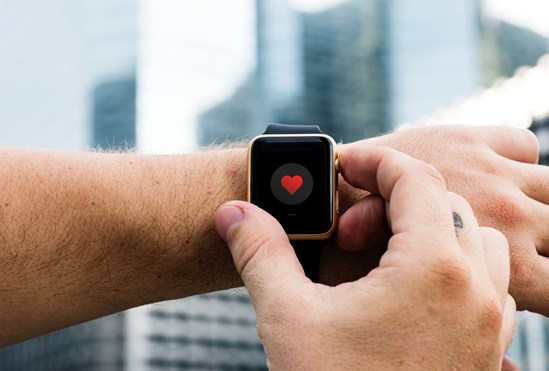
3 Apps to Improve Men’s Health

Although more men use fitness apps than women, adoption is mainly by younger men.

NEWS

3 Apps to Improve Men’s Health

Although more men use fitness apps than women, adoption is mainly by younger men, and men of all ages fall behind women in the use of nutrition or self-care apps.

With Men’s Health Week running from 10th June ‘till Father’s Day, this month we’re focusing on health apps that are effective in tackling issues most prevalent amongst men.  From keeping a close watch on heart disease, encouraging a healthy diet, to encouraging timely GP visits.

One man in five dies before he is old enough to retire. Health apps enable men to better understand and take control of their health, helping to change this number.

On behalf of NHS organisations, ORCHA tests more apps than anyone else, looking at effectiveness, safety, security and usability.  Here are three top scoring apps that are designed to help tackle three issues more common amongst men:

  • Heart Disease – Fibricheck uses the phone’s camera and flash to measure the user’s heart rate, helping to detect irregular heartbeats.
  • Weight management – Nutracheck calorie counter allows users to quickly and easily track and report on consumption of calories, carbs, sugar, protein, fat, saturated fat and salt.
  • Symptom checker – Your.MD uses advanced AI to feedback on possible conditions, giving the nudge to visit a doctor.

Watch our video below to find out more about ORCHA’s favourite 3 apps for men’s health:


Due to our continual re-review process, all app scores are subject to change. As such, we’d always encourage you to view our app reviews on our App Library, as this reflects Live data and app updates which are continuously changing. Our re-review process ensures that the most up-to-date information for the latest version of an app can be accessed via our App Library.

About ORCHA

Founded by NHS clinicians, ORCHA is the world’s leading digital health evaluation and distribution organisation. We provide services to national health bodies across three continents, including the NHS in 50% of UK regions, delivering national accreditation frameworks, bespoke Digital Health Libraries, and professional recommendation tools, specific to the needs of our clients. ORCHA’s unique Review Engine assesses digital health solutions against more than 300 measures across Clinical/Professional Assurance, Data & Privacy, and Usability & Accessibility, plus additional criteria depending on needs.

See how ORCHA works

Discover how our services, including Reviews, Digital Health Libraries, and market intelligence reports, can work for your specific needs.

Your Health and Care App Library

Search ORCHA’s App Library, featuring thousands of independent app reviews across a broad spectrum of health conditions. Every app is evaluated against more than 300 measures across Clinical/Professional Assurance, Data & Privacy, and Usability & Accessibility, making it easy for you to find the best apps for your needs.

Apps to support Mental Health Awareness Week

Mental health issues can affect anyone, regardless of age, background or gender.

NEWS

Apps to support Mental Health Awareness Week

Mental health issues can affect anyone, regardless of age, background or gender. Awareness of mental health is becoming increasingly important as the number of people suffering from a mental health condition also increases.

Mental Health Awareness Week runs from 13th to 19th May, and this year focusses on the issue of Body Image. Whilst body image is not in itself a mental health condition, feeling uncomfortable with your body can decrease overall mental wellbeing, possibly leading to mental health concerns developing.


Why is mental health important when thinking about body image?

According to the Mental Health Foundation, “Research has found that higher body dissatisfaction is associated with a poorer quality of life, psychological distress and the risk of unhealthy eating behaviours and eating disorders.” Body image concerns are fairly common, with just over one third of adults saying they have felt anxious (34%) or depressed (35%) because of their body image (Mental Health Foundation, 2019). As such, it is important to increase awareness of how we can take care of the mental wellbeing of ourselves and others in terms of body image.


How can health apps help?

ORCHA has developed an extensive app library, including thousands of mental health apps, so that everyone can easily access the safest, most trustworthy and effective apps for their individual health needs. If you are struggling with body image concerns and feel that this is having a detrimental effect on your mental health, you might find the mental health apps listed below to be of help. These apps have been scored highly by ORCHA, according to Clinical Assurance, Data Privacy and User Experience. You can click on the name of the app to access its ORCHA Review.


‘MeeTwo’ for Stress and Anxiety: MeeTwo allows users to share their personal experiences safely and anonymously in order to access support and advice.

‘DistrACT’ for Self-Harm: distrACT provides easy, quick and discreet access to general health information and advice about self-harm.

‘Jourvie’ for Body Image: Jourvie supports people suffering from eating disorders, giving them a way of filling out food diaries and developing coping strategies.


This Mental Health Awareness Week, #BeBodyKind, to both yourself and others. You can find out more about the Awareness Week via the Mental Health Foundation’s campaign page here.


If you are concerned about your mental health and need help, click this link for resources that can help. You are not alone and help is available.


Image credit: https://www.aresearchguide.com/

About ORCHA

Founded by NHS clinicians, ORCHA is the world’s leading digital health evaluation and distribution organisation. We provide services to national health bodies across three continents, including the NHS in 50% of UK regions, delivering national accreditation frameworks, bespoke Digital Health Libraries, and professional recommendation tools, specific to the needs of our clients. ORCHA’s unique Review Engine assesses digital health solutions against more than 300 measures across Clinical/Professional Assurance, Data & Privacy, and Usability & Accessibility, plus additional criteria depending on needs.

See how ORCHA works

Discover how our services, including Reviews, Digital Health Libraries, and market intelligence reports, can work for your specific needs.

Your Health and Care App Library

Search ORCHA’s App Library, featuring thousands of independent app reviews across a broad spectrum of health conditions. Every app is evaluated against more than 300 measures across Clinical/Professional Assurance, Data & Privacy, and Usability & Accessibility, making it easy for you to find the best apps for your needs.

ORCHA CEO Interview: Health App Innovators have to “step-up”

ORCHA’s CEO, Liz Ashall-Payne, was recently interviewed by MobiHealthNews, in which she discussed the health app landscape.

NEWS

ORCHA CEO Interview: Health App Innovators have to “step-up”

ORCHA’s CEO, Liz Ashall-Payne, was recently interviewed by MobiHealthNews, in which she discussed the health app landscape. Speaking about the many unregulated health apps on the market, Liz said:

“It’s quite a fast-changing landscape of regulation and requirements, and so absolutely we have to support the innovators, but equally, once they’re informed of those requirements, they need to step up.”

ORCHA supports app developers in meeting the constantly changing regulations so that their apps can meet the safest and most effective standards. Liz explains that:

“When we’ve reviewed an app, we contact the developer and we provide them with a report that tells them exactly what they need to do to be able to show clinical effectiveness, along with all the other relevant standards that they may potentially not be adhering to.”


By enabling app developers to constantly improve their apps and ensure they are meeting regulatory standards, ORCHA simultaneously allows consumers and health professionals to access the best apps for their individual needs. You can search ORCHA’s App Finder here.


Read Liz’s full interview with MobiHealthNews.

About ORCHA

Founded by NHS clinicians, ORCHA is the world’s leading digital health evaluation and distribution organisation. We provide services to national health bodies across three continents, including the NHS in 50% of UK regions, delivering national accreditation frameworks, bespoke Digital Health Libraries, and professional recommendation tools, specific to the needs of our clients. ORCHA’s unique Review Engine assesses digital health solutions against more than 300 measures across Clinical/Professional Assurance, Data & Privacy, and Usability & Accessibility, plus additional criteria depending on needs.

See how ORCHA works

Discover how our services, including Reviews, Digital Health Libraries, and market intelligence reports, can work for your specific needs.

Your Health and Care App Library

Search ORCHA’s App Library, featuring thousands of independent app reviews across a broad spectrum of health conditions. Every app is evaluated against more than 300 measures across Clinical/Professional Assurance, Data & Privacy, and Usability & Accessibility, making it easy for you to find the best apps for your needs.

Encouraging Uptake of Health Apps Across the NHS

Eleanor Smith MP chaired a parliamentary roundtable discussion on Tuesday 16 October 2018, supported by Roche Diabetes Care.

NEWS

Encouraging Uptake of Health Apps Across the NHS

Eleanor Smith MP chaired a parliamentary roundtable discussion on Tuesday 16 October 2018, supported by Roche Diabetes Care, to discuss and determine how the use of health apps can be encouraged across the NHS for the benefit of patients.


Experts were brought together to discuss:

• The potential benefits of health apps to patients and the NHS

• The key challenges and barriers to utilizing health apps in the NHS

• What advice and support should be provided to those wanting to develop or adopt a health app

• The role the life sciences industry should play in the health app NHS landscape


This note provides an overview of the key themes from the discussion, which was held under the Chatham House Rule.


Background 

Through proactive leadership from NHS England and NHS Digital, health apps are being increasingly utilized

at national and local levels across the NHS. This welcome leadership and ‘open-door policy’ is most evident in the

creation of the NHS Apps Library and the development of the NHS App. Attendees commended this proactive approach, noting that it is viewed as a global exemplar.

Alongside an update on both initiatives, attendees highlighted various health apps that have been developed by the NHS and by the digital industry, to meet specific healthcare challenges or requirements. These apps can provide different types of digital support, including:

Empowering patients and carers to self-manage and improve health outcomes

• Improving patient care from prevention to management

• Complementing existing care delivery

• Addressing health inequalities

• Acting as portals to other digital services

• Supporting administrative tasks

• Relieving pressure on the current NHS workforce

It was agreed that, despite the success to date, more can be done to fully realize the potential of apps.


Key themes from the discussion

There was consensus among attendees on the potential of health apps to support improvements in service delivery and patient

care. The group identified four interconnected themes and made several recommendations to improve the uptake of health

apps. These themes and recommendations are as follows:


1/ Facilitating greater data sharing

For the full potential of health apps to be realized within the NHS there must be effective data flow and

interoperability between apps and traditional services, for example by linking data from apps with an individual’s patient

record. Interoperability through suitable platforms and engagement criteria should be incorporated within plans for joined-up

national electronic patient records. Attendees referenced the ‘Blue Button’ concept – developed by the US Government

to signify that a site has the functionality to download health records – as a potential opportunity for learning for the NHS.

Recommendation A system of efficient and effective data sharing needs to be established for appropriate health apps

to be compatible with integration within electronic patient records.

Whilst debate continues around the ‘ownership’ of patient data, the importance of ‘intellectual property’ that is produced

by health apps should not be undermined. Attendees discussed the need to develop a centralized model of patient consent

to ensure effective data flow and interoperability. Before such a model could be introduced, attendees recommended that

an extensive public engagement campaign be undertaken around the benefits of data sharing to the individual and wider

health system.


Recommendation

A consultation should be launched by NHS England on establishing a centralized model of patient consent, alongside a public engagement program on the benefits of data sharing for individuals and the wider NHS.


2/ Expanding public engagement and education on the use of technology

The public should be made aware of the ‘trusted’ health apps that have been accredited by the NHS through sufficient

evidence submissions and how they could use these to achieve their health goals. The group suggested that public

engagement and education should utilize the most effective methods, both digital and traditional, for spreading messages

amongst all parts of the population to promote these evidence-based options over less regulated solutions. Attendees were

conscious of health inequalities and highlighted that any solutions and/or engagement should be focused on reducing

these inequalities across the country.


Recommendation

An extensive public engagement and education program should be undertaken, using digital platforms where appropriate, to showcase effective / evidence-based health apps and encourage

wider usage.


3/ Incorporating health apps into relevant clinical pathways

To encourage the uptake of accredited health apps, the group suggested an aim of including them in relevant clinical

pathways where appropriate as complementary or alternative options to traditional care. For this to happen, attendees noted

the importance of healthcare professionals understanding and trusting the various levels of evidence required for apps to be

accredited. Attendees commended the work of NHS England and NHS Digital to categorize the associated evidence required

for the app to be assessed. Healthcare professional ‘buy-in’ to health apps and new digital solutions was recognized as a key

component for successful uptake, alongside tailoring to a specific region or condition as needed.


Recommendation

Health apps should be incorporated into relevant clinical pathways, with engagement to secure

‘buy-in’ from healthcare professionals.

It was noted that the current system primarily supports and rewards the initial innovators of apps, and not those adapting

or adopting health apps to meet local patient needs. To encourage and spread best practices, the group recommended

improving signposting to examples, as well as increased support both for the initial innovators and for future

adaptors/adopters.


Recommendation

Support needs to be from conception to roll-out for innovators developing health apps, as well as for those looking to adopt or adapt existing apps for local or regional contexts.

The group discussed the approach to the appraisal of health apps and the value of establishing reimbursement pathways at a

national and local level to provide structure to support the uptake and foster further innovation. The potential success of

personal budgets was raised by attendees. It was suggested that a similar scheme could be rolled out for the use of health

apps, by allocating additional budgets for people with long-term conditions to choose and purchase their health apps.


Recommendation

Reimbursement pathways, with clear evidence benchmarks, should be created at both local

and national levels to encourage the continued uptake of, and innovation in, health apps.


4/ Utilising health apps to support the NHS workforce

Health apps have the potential to reduce pressures on the NHS workforce, through providing time-saving efficiencies in

the delivery of care. For this to be exploited, healthcare professionals need to be sign-posted to approved and relevant

health apps for their specialism and trained on their use. As the NHS looks to the future, the potential of health apps should

be viewed as a key opportunity for improving the delivery of care and reducing pressures on the stretched NHS workforce,

with health apps being either prescribed or accessible ‘off the shelf ’ solutions that individuals can download themselves.


Recommendation

Sign-posting to newly approved health apps and training on their use should be included within

programs for newly qualified and established HCPs.

Attendees with experience in developing health apps highlighted the importance of sustainability by ensuring the

products and solutions are regularly updated through partnerships with end-users to get their feedback. As part of the

NHS Apps Library it will be important that mechanisms are established that enable both developers and users of apps

to share feedback and best practice.


Recommendation

Health app developers and end-users should be supported to share feedback and best practice

on the practical development and evolution of health apps.